Language Learning - System is the key
Daily System That Survives Bad Days
System is the key – Daily System That Survives Bad Days
Some days, the thought of opening a language app feels heavier than running a marathon. The trick isn’t motivation-it’s survival.
I’ve been learning multiple languages for years. Spanish is my comfort zone, Russian is a puzzle, and Vietnamese still feels like a mountain. The hardest truth I’ve faced? Motivation is fragile. Systems survive where willpower fails. This post is about building a daily language system that actually survives bad days.
Problem / Challenge
Every language learner hits this:
- Life interferes: work, errands, family-any excuse becomes a reason
- Motivation is uneven: some days I want to speak Russian, some days I don’t even want to look at my notes
- Consistency collapses easily: skipping a day feels catastrophic, which ironically makes me skip more
I’ve tried fancy streaks, gamified apps, immersion bombs. They all fail when life gets messy. Motivation isn’t a reliable engine-systems are.

Mistakes / Failures
Here’s where I screwed up:
- Overloading my daily plan: I once scheduled 90 minutes of listening, reading, speaking and writing for Vietnamese at A2. Most days I couldn’t touch half
- Chasing perfect input: thinking I had to watch the perfect Russian video or read the ideal Spanish article. I wasted hours without output
- Ignoring mental energy: I treated language learning like a task list, not a mental load. On bad days, I crashed
My perfect system was perfect only on perfect days. Reality disagreed.
Lessons Learned
I had to pivot. The rules I live by now:
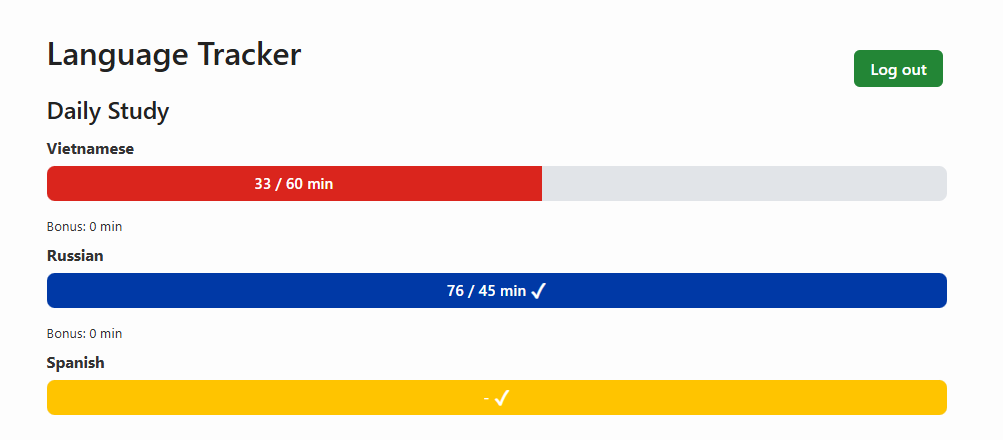
- Tiny wins are better than perfect sessions
- 5 minutes of Vietnamese vocab beats zero.
- A single Russian sentence out loud is better than ignoring speaking entirely
- Energy-first approach
- Morning brain = output-heavy tasks (writing, speaking)
- Evening = passive input (listening, reading)
- On low-energy days, I swap these without guilt.
- Flexible structure beats rigid schedules
- Core: one micro-task per skill every day
- Optional: extra if energy permits
- Example: Spanish -> one podcast segment, one sentence summary, one new word
- Visible progress fuels survival
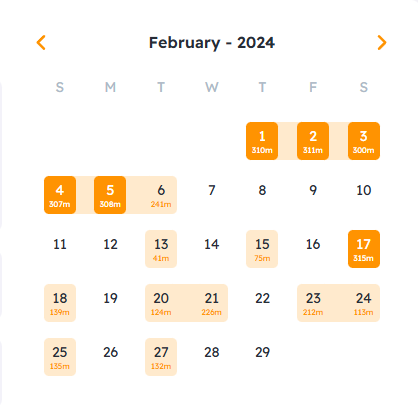
- I keep a simple streak tracker for tiny tasks, not hours
- Seeing even one dot a day reminds me I’m still moving forward
Takeaways
Here’s what works for me:
- Focus on survival, not achievement: if my system keeps me moving even on the worst day, it’s winning
- Micro-tasks = micro-victories: a sentence, a word, a short listening clip
- Adjust by energy, not guilt: flexibility is a superpower
- Consistency > intensity: better 5 minutes daily than 60 minutes sporadically
Motivation will fail. Life will intervene. Your system is what keeps your languages alive.